
Gottlieb-Daimler-Stadion

Wikimedia Commons · CC BY-SA 3.0
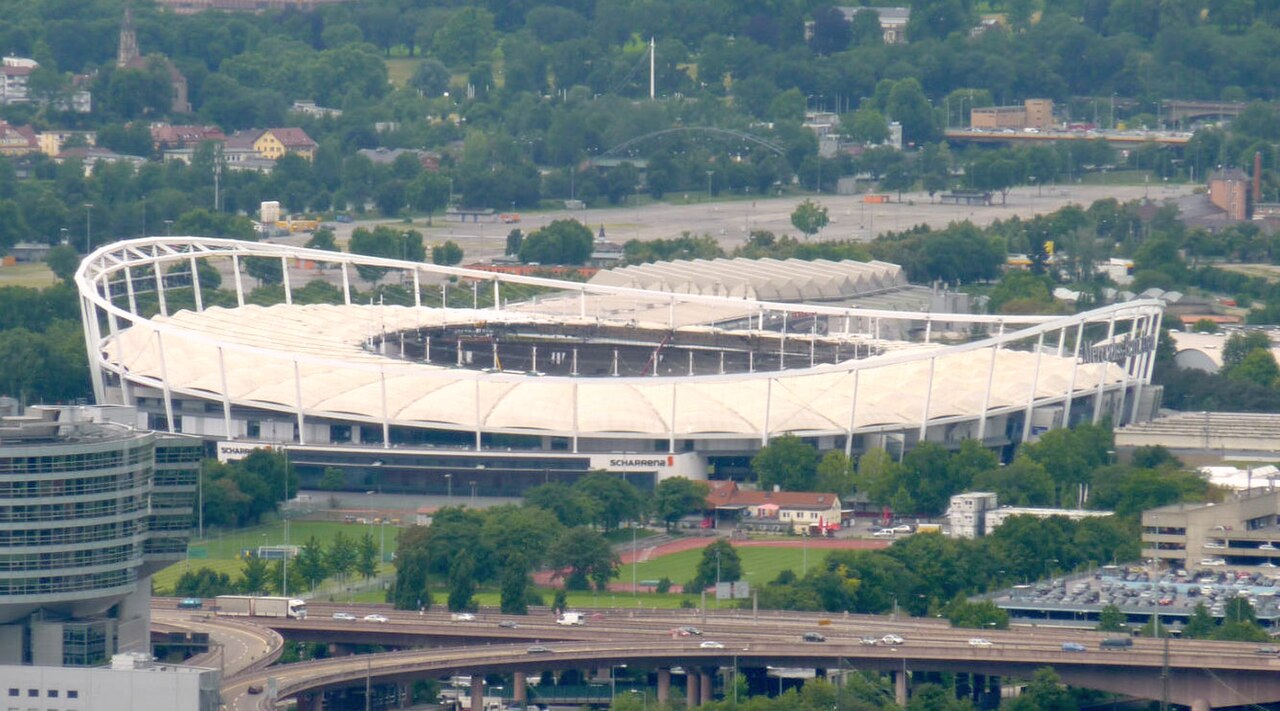
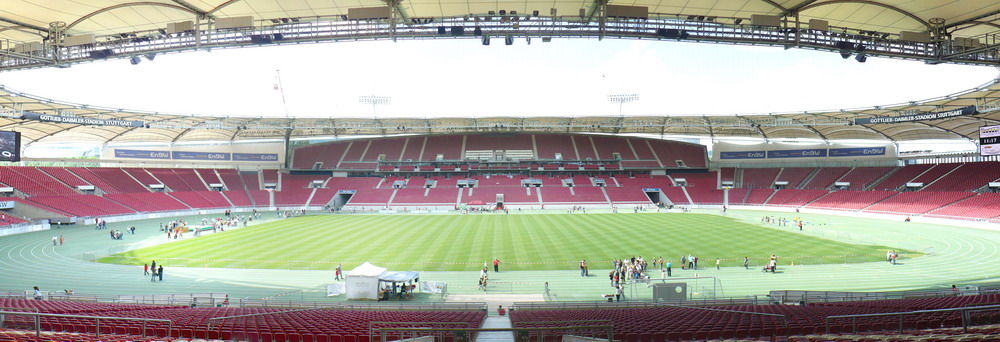
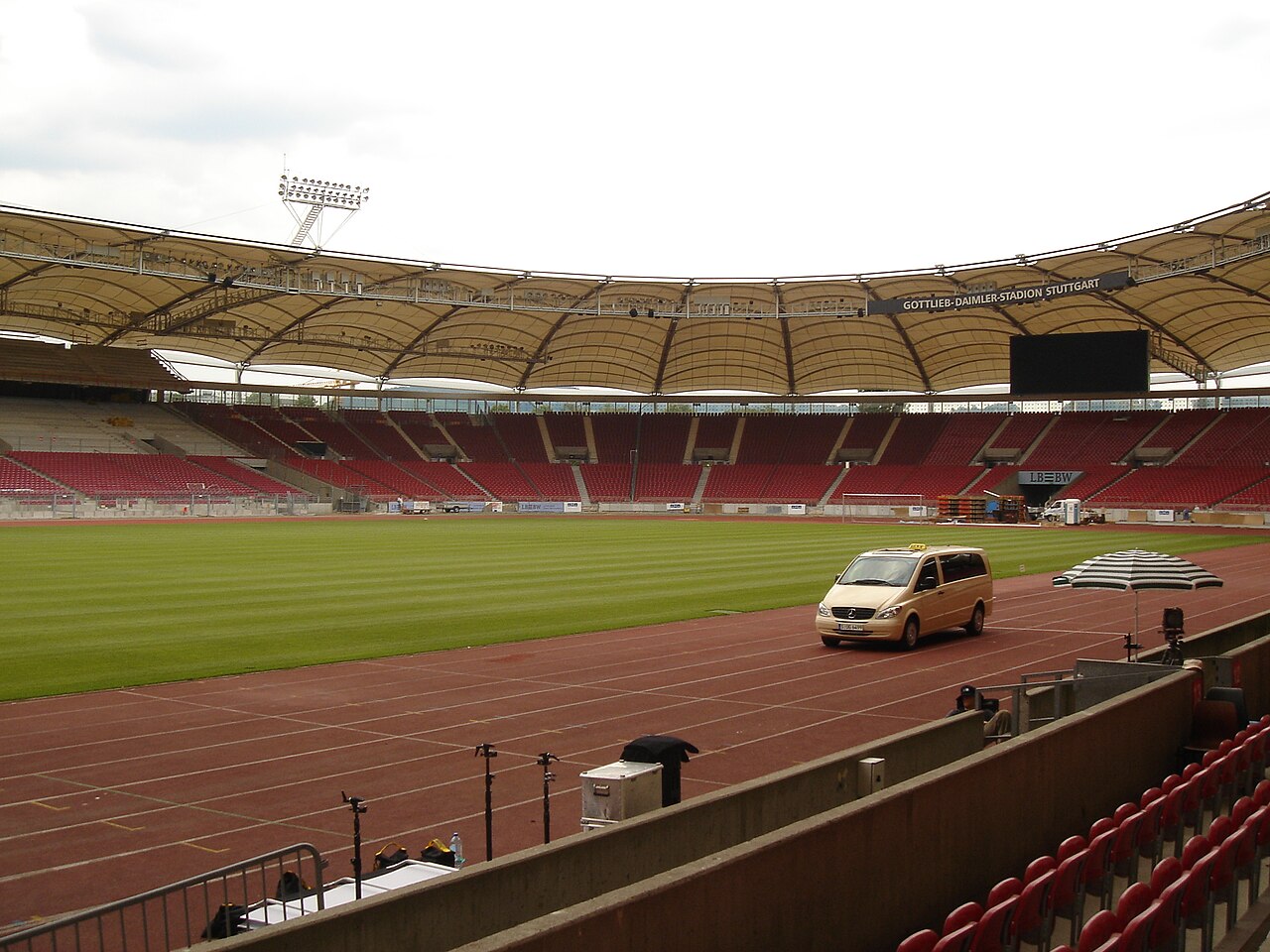
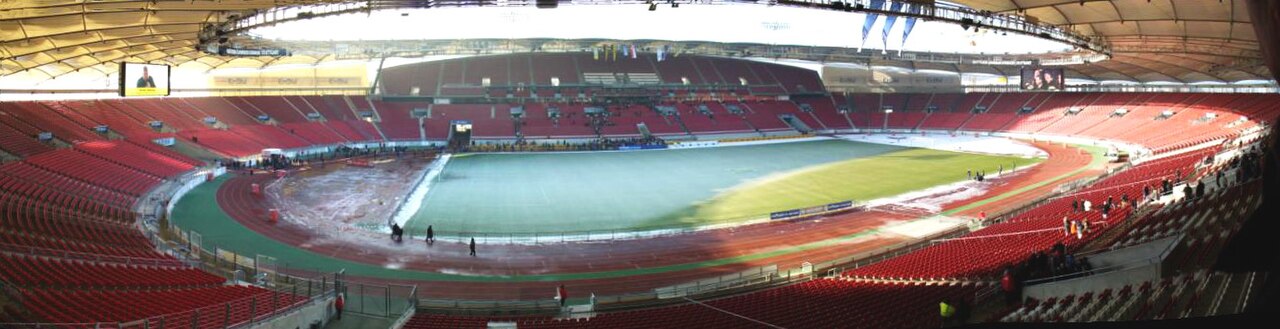
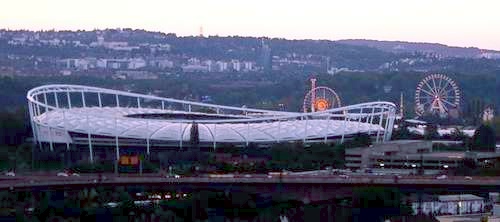
The Gottlieb-Daimler-Stadion—known today as the MHPArena after a later sponsor naming, and before that simply the Neckarstadion—is the home ground of VfB Stuttgart, one of Germany's most storied football clubs. More than a venue, the stadium is a living monument to Stuttgart's working-class identity. The roar from the famous supporters' end, the smell of currywurst on match days, and the unbroken thread of fans passing down their seat in the south stand from father to son make it one of the most atmospheric grounds in European football. Its naming history—originally the Adolf-Hitler-Kampfbahn, then Neckarstadion, then Gottlieb-Daimler-Stadion, then MHPArena—mirrors the city's own blend of industrial heritage and modern commerce, but the soul of the place remains unmistakably VfB.
- Location
- Bad Cannstatt, Stuttgart, Baden-Württemberg, Germany
- Original name
- Adolf-Hitler-Kampfbahn
- Gottlieb-Daimler-Stadion name period
- 1993–2017
Lore & Background
When VfB Stuttgart first kicked a ball on this ground in 1933, it was a modest rectangle beside the Neckar river, little more than a concrete bowl with wooden stands. The original name, Adolf-Hitler-Kampfbahn, was a dark relic of the Nazi era; after WWII it was reborn as the Neckarstadion, a simple, honest label: the stadium by the river. Over the decades it was rebuilt, expanded, and re-roofed, but the club never left. That continuity—over ninety years of the same four corners of grass—is rare in German football, where so many clubs have migrated to gleaming new builds. Every one of those chapters was rehearsed, celebrated, or mourned here first. The renaming to Gottlieb-Daimler-Stadion in 1993 was a nod to Stuttgart's automotive soul—Daimler-Benz being the city's defining industrial legacy—and the stadium hosted matches during the 2006 FIFA World Cup, giving it a brief but brilliant moment on the global stage. The later switch to MHPArena in 2017 followed the familiar German pattern of corporate naming, but die VfB-Fans still often call it simply 'das Neckarstadion' or 'der Daimler,' because to them the name is not a brand; it is a memory. The stadium's true legend, however, is not in its architecture but in its noise. The south stand, where the organized and casual supporters mix in a dense, swaying wall of red and white, produces a sound that visiting teams describe as a physical pressure. On cold winter afternoons when the floodlights cut through the mist over the Neckar, the chanting of 'VfB, VfB, VfB' rolls off the concrete and into the river, and for ninety minutes the city belongs to the club.
In Their Own Story
November, 1983. The floodlights at the Neckarstadion haven't fully cut through the fog yet, and the south stand is a sea of red scarves and breath. A young boy, no older than nine, sits on his father's shoulders. His father has come to every home game since '62, and he tells the boy, 'You'll be here when we win the Champions League.' The boy doesn't know what that means yet. He just knows the smell of the plastic seat, the thump of the drum, and the way the whole stand leans forward as one body when the ball hits the crossbar. Twenty years later, on a May night in Copenhagen, the boy will be the one on the shoulders—of his own son—watching the same four corners of grass from the same concrete bowl. The stadium will have a new name by then. The roar will not.
Reader's Guide
The south stand is where the soul of VfB Stuttgart lives. It is not a segregated 'ultra' section in the way some German grounds are; it is a mixed, democratic wall of supporters where the 1900er, the casuals, the families, and the long-suffering away-travelers all share the same concrete. On a Saturday afternoon in February, with the wind off the Neckar cutting through your jacket, you will find yourself pressed shoulder-to-shoulder with strangers who become family for ninety minutes. The ritual is simple and sacred: you arrive early, you find your spot, you join the chant. There is no script, no choreography. The singing is organic, passed down, sometimes in Swabian dialect, sometimes in the rough polyrhythm of a drum line that has been hitting the same beat for decades. When the team scores, the stand doesn't just cheer—it detonates. When they concede, there is a collective, guttural groan that is almost a form of prayer. To a Stuttgart supporter, the stadium is not a venue you attend. It is a place you belong. Your seat is not a ticket; it is an inheritance. You do not buy entry to the Neckarstadion. You grow into it, the way the river grows into the city—slowly, inevitably, and with a current you can never quite escape.
Did You Know?
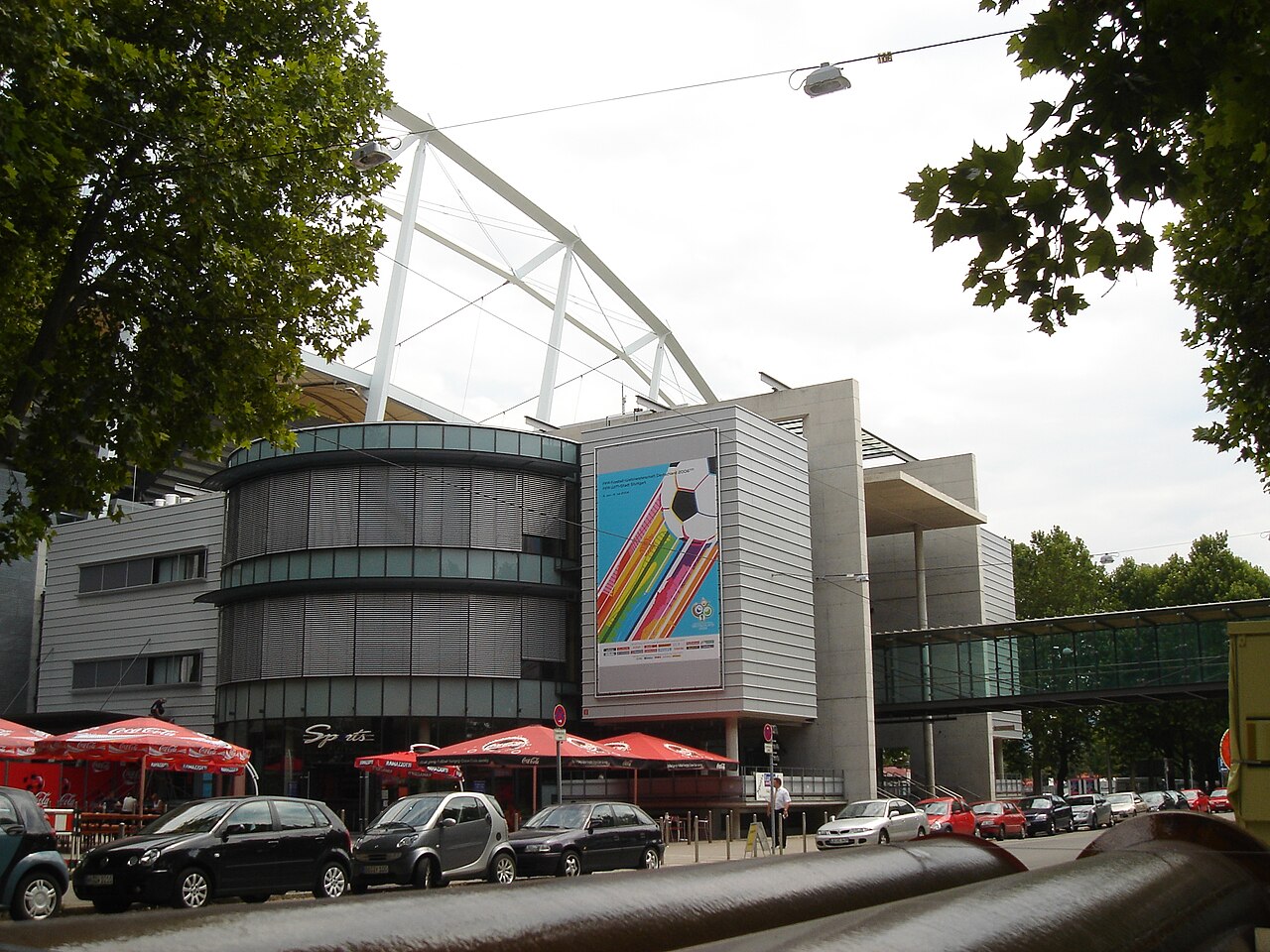
- The stadium hosted matches during the 2006 FIFA World Cup, giving it a brief but memorable spot on the world's biggest football stage.
- Its naming history—Neckarstadion, then Gottlieb-Daimler-Stadion, then MHPArena—reflects Stuttgart's identity as a city where automotive industry and football culture are deeply intertwined.
- The famous supporters' end in the south produces an atmosphere that visiting teams have long described as one of the most intimidating in German domestic football.
Gallery
Frequently Asked Questions
What is the Gottlieb-Daimler-Stadion?
It is the home ground of VfB Stuttgart, situated in the Stuttgart-West district of Baden-Württemberg, Germany. The name was in use from 2006 to 2017 before the venue received its current rebrand as the MHPArena.
Why was the stadium named after Gottlieb Daimler?
The naming paid tribute to the automotive pioneer whose company was founded in Stuttgart, linking the club's identity to the city's industrial roots. A sponsorship arrangement carried the Daimler name on the ground between 2006 and 2017.
Did the Gottlieb-Daimler-Stadion host the 2006 FIFA World Cup?
Yes, the venue was selected as one of the host stadiums for the 2006 FIFA World Cup in Germany. It staged several group-stage and knockout matches during that tournament.
What is the Gottlieb-Daimler-Stadion called today?
Since 2017 the stadium has operated under the name MHPArena following a new sponsorship deal. Prior to the Daimler era, it was simply known as the Neckarstadion, named after the river that flows through Stuttgart.
Why do Stuttgart fans see the stadium as more than just a venue?
The ground is woven into the city's working-class identity, with long-standing traditions such as families passing down south-stand seats from father to son. The roar from the supporters' end and the sensory buzz of match day make it one of the most atmospheric football grounds in Europe.
More in Stadium & Culture
Elsewhere in the VfB Stuttgart universe
Spotted an error? Know more?
This is a living reference — every entry is fact-audited, and reader corrections feed straight into our audit queue. Suggest an edit · See this site's audit record