Jürgen Klinsmann
The acrobat of the Neckarstadion, whose clawing celebrations became a generation's memory.

via Wikipedia: Jürgen Klinsmann · see source
Jürgen Klinsmann is one of the most beloved and polarising figures in VfB Stuttgart's history. His acrobatic, improvisational, and unapologetically flamboyant style of play made him a magnet for both adoration and controversy, and his time at the Neckarstadion remains a golden era for Stuttgart supporters. This entry is an unofficial fan tribute to Klinsmann's Stuttgart years and his wider legacy. It is written by fans, for fans, and does not represent the official position of VfB Stuttgart or any affiliated body.
- Position
- Striker / Forward
- Nationality
- German
- Major honours (international)
- 1990 FIFA World Cup winner (West Germany)
- Later career
- Manager – Germany (2004–2006), United States (2011–2016)
Verified Timeline
Lore & Background
His finishes were rarely orthodox: a bicycle kick, a back-heel flick, a diving header that seemed to defy physics. Opponents and commentators alike could never quite predict what he would do next, and that unpredictability was part of the magic. Klinsmann's relationship with the Stuttgart faithful was one of mutual devotion. He was not the most disciplined player in the world – his temper, his occasional clashes with coaches, and his showman's flair drew criticism – but the fans at the Neckarstadion worshipped his creativity. His iconic 'claw' celebration, where he would rake his fingers through the air after scoring, became an image seared into the collective memory of the club's supporters. After leaving for Inter Milan in 1989, Klinsmann went on to a celebrated international career, winning the 1990 World Cup with West Germany. He later returned to Germany as a manager, guiding the national team to the 2006 World Cup on home soil. Yet for Stuttgart fans, the Klinsmann they remember forever is the one in the white and red kit, dancing on the edge of the box, about to do something no one else in football could.
In Their Own Story
The floodlights at the Neckarstadion hummed with a low, electric buzz. It was the 87th minute, the score 1-1, and the away team had parked a bus in front of their goal. Klinsmann stood just outside the area, hands on his hips, jaw set. He could feel the weight of twenty thousand voices pressing against the stadium walls. A long ball was swung into the box. Three defenders rose. Klinsmann didn't. He let the ball hang, let the defenders commit, and then – as if gravity had simply forgotten him – he launched himself sideways, body horizontal, and met the ball with a header that arced over the outstretched goalkeeper's fingertips and nestled into the top corner. For a half-second, time stopped. Then came the celebration. He dropped to one knee, raised both hands, and raked his fingers through the air in that unmistakable clawing motion, eyes locked on the stands. The away end went silent. The Stuttgart end detonated. A woman in the third row, a factory worker with paint on her overalls, was on her feet screaming. Beside her, her teenage son was holding her hand, both of them crying. Klinsmann walked back to the centre circle, still grinning, and tapped the ball with the sole of his boot. The match was over. The story was not.
Reader's Guide
He was the creative, dangerous focal point of an attacking side that combined technical quality with individual brilliance. Playing style: A pure instinctive striker, Klinsmann was as much an artist as a scorer. He favoured acrobatic finishes – bicycle kicks, back-heels, diving headers – over straightforward runs. His movement was unpredictable, his timing extraordinary, and his willingness to attempt the impossible made him a nightmare for defenders and a joy for spectators. He was also, by his own admission, a maverick: his temperament and showmanship occasionally put him at odds with coaches and teammates. On the international stage, he was a key figure in West Germany's 1990 World Cup triumph, scoring in the final. His career spanned Inter Milan, Tottenham Hotspur, and Bayern Munich before retirement. Legacy: For Stuttgart, Klinsmann is the embodiment of creative, fearless football. His claw celebration, his acrobatic goals, and his larger-than-life personality remain touchstones for every generation of fans who grew up watching the club's golden 1980s. He later returned to German football as a manager, but his Stuttgart years remain the chapter fans cite first.
Did You Know?
- Klinsmann's famous 'claw' celebration – raking his fingers through the air after scoring – became so iconic that it was widely imitated by fans and players across Germany for years.
- He was a key part of the celebrated VfB Stuttgart squad of the mid-1980s, a team known for combining technical excellence with individual flair that captivated the entire country.
- After his playing career, Klinsmann returned to German football as a manager, leading the national team to the 2006 FIFA World Cup held on German soil.
- The winning goal in the 1990 World Cup final against Argentina was scored by Andreas Brehme from the penalty spot, not by Klinsmann.
Gallery
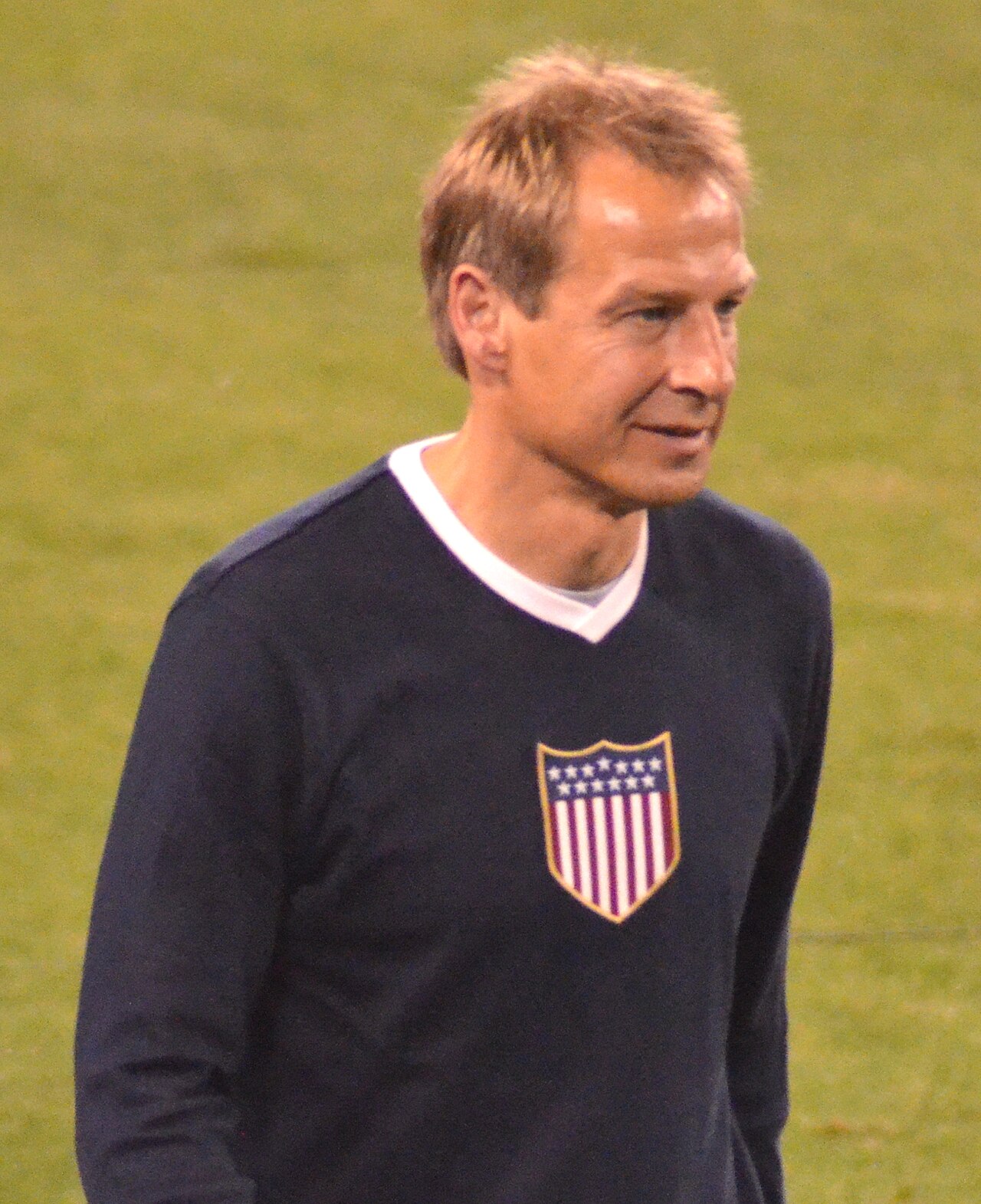
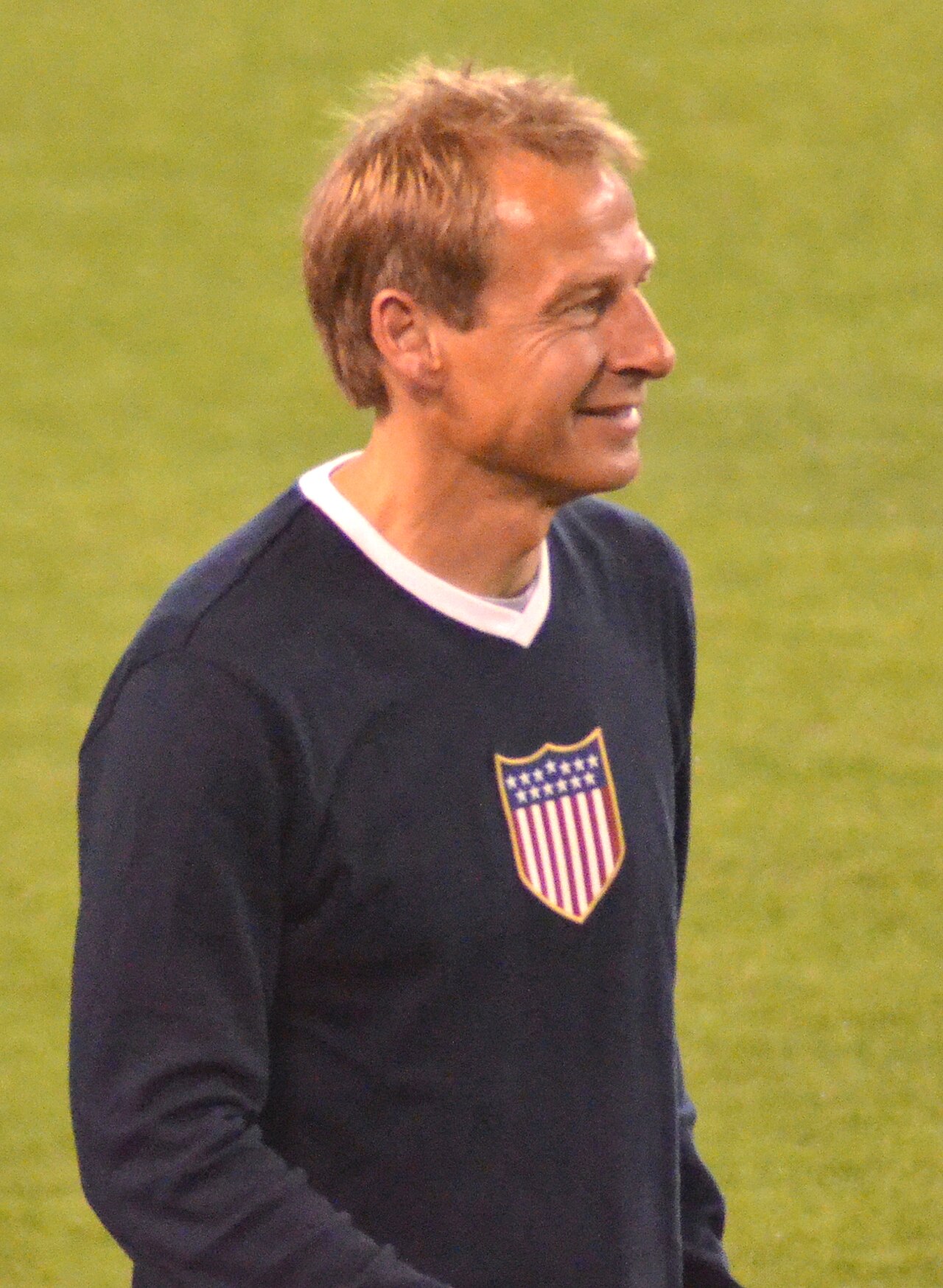
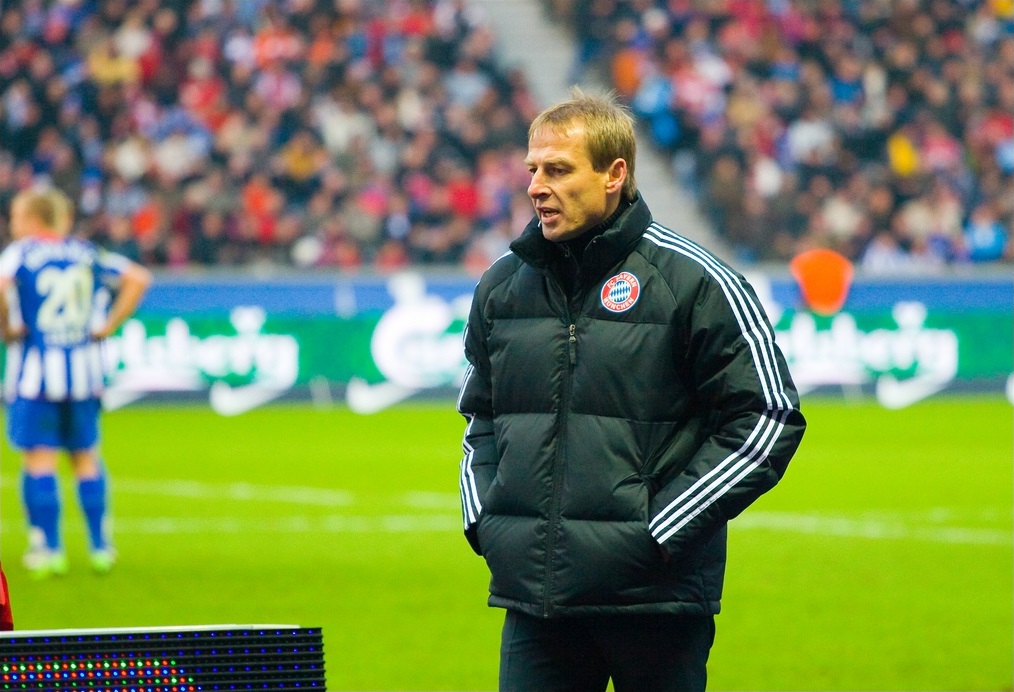
Frequently Asked Questions
Who is Jürgen Klinsmann?
Jürgen Klinsmann is a German striker whose time at the Neckarstadion made him one of VfB Stuttgart's most iconic and divisive figures. His acrobatic, improvisational approach to attacking and his theatrical goal celebrations turned him into a cult hero for Stuttgart supporters.
What position did Klinsmann play?
He operated as a forward, functioning as a free-roaming goal threat who relied on instinctive finishing, aerial ability, and creative unpredictability rather than pure pace or physical dominance.
What was Klinsmann's playing style like?
Klinsmann was defined by his acrobatic finishes, clawing celebrations, and an unapologetically flamboyant on-pitch personality. He played with a kind of improvisational chaos that delighted Stuttgart fans while infuriating opponents and, at times, his own managers.
Did Klinsmann win the World Cup?
Yes — he was part of the West German squad that lifted the 1990 FIFA World Cup, which remains the highlight of his international career.
Did Klinsmann become a manager after retiring?
He went on to manage the German national team from 2004 to 2006 and later took charge of the United States national team from 2011 to 2016, extending his influence well beyond the Stuttgart years.
More in Legendary Players
Elsewhere in the VfB Stuttgart universe
Spotted an error? Know more?
This is a living reference — every entry is fact-audited, and reader corrections feed straight into our audit queue. Suggest an edit · See this site's audit record